



Why the Casting Industry Must Automate
The global manufacturing industry is rapidly moving toward automation and intelligent production. In the casting industry, automation has become a key factor for improving efficiency, product quality, and workplace safety.
Traditional foundries often rely heavily on manual operations, which can lead to inconsistent product quality and high labor costs.
As market competition increases, foundries must adopt automated equipment and intelligent production systems to remain competitive.
- Challenges Facing the Traditional Casting Industry
Many traditional foundries are facing significant challenges in modern manufacturing.
- Labor Shortage
Casting work is often labor-intensive and physically demanding. Many factories struggle to recruit skilled workers.
- Rising Labor Costs
Manual production requires a large workforce, leading to increasing production costs.
- Inconsistent Product Quality
Human operations may cause variations in casting quality, affecting product reliability.
- Safety Risks
High temperatures, molten metal, and heavy equipment create safety risks for workers.
- How Automation Improves the Casting Industry
Automation technologies are transforming modern foundries and improving overall production efficiency.
- Increase Production Efficiency
Automated casting systems can operate continuously with minimal downtime.
Robots and automated machines perform tasks faster and more consistently than manual operations.
- Improve Product Quality
Automation ensures precise control of key parameters such as:
- temperature
- pressure
- pouring speed
This results in more consistent and higher-quality castings.
- Reduce Labor Dependency
Automated production lines reduce the need for large numbers of workers.
This helps companies address labor shortages and control costs.
- Improve Workplace Safety
Robots can perform dangerous tasks such as:
- metal pouring
- grinding and polishing
- high-temperature operations
This significantly reduces the risk of workplace accidents.
- Key Automation Technologies in Modern Foundries
Several automation technologies are widely used in modern casting factories.
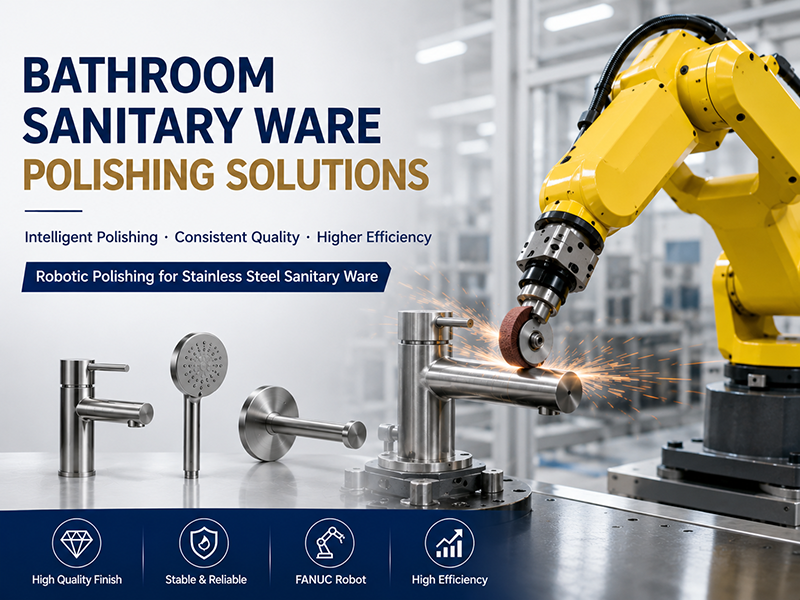
- Robotic Grinding and Polishing
Robots can automatically grind and polish metal castings with high precision.
- Automated Casting Machines
Modern casting machines provide stable control of pouring and pressure.
Examples include:
- low pressure die casting machines
- Gravity Die Casting Machines
- automatic core shooting machines
- Smart Manufacturing Systems
Digital monitoring systems allow manufacturers to monitor production data in real time.
This helps optimize production processes and improve efficiency.
- Benefits of Automation for Foundries
Adopting automation brings several important benefits.
- Higher Production Capacity
Automated production lines increase overall output.
- Better Product Consistency
Automation reduces human errors in production.
- Lower Production Costs
Although automation requires initial investment, it reduces long-term labor costs.
- Stronger Market Competitiveness
Foundries with advanced automation can respond faster to market demands.
- Conclusion
Automation is becoming essential for the future development of the casting industry. By adopting advanced equipment and intelligent production systems, foundries can significantly improve productivity, product quality, and workplace safety.
As global competition increases, foundries that invest in automation will gain a significant advantage in the market.